

Over a million South Africans submitted savings pot withdrawal claims in the first quarter after the two-pot retirement system launched on 1 September 2024. Some received their money within a week. Others are still waiting months later, held up by SARS compliance flags, wrong banking details, or applications submitted through entirely the wrong channel. The system exists. The money is there. But knowing how to apply for two-pot system correctly is what separates a smooth payout from a drawn-out administrative headache.
This article covers exactly that: how the system works, who qualifies to access it, what documentation you need, how the application process runs at the major fund administrators, and what tends to go wrong. Whether you are in a pension fund, a provident fund, or a retirement annuity with Old Mutual, Sanlam, Allan Gray, or Discovery, the core process follows the same logic, with important variations depending on your fund type and employer structure.
Understanding What the Two-Pot System Actually Contains
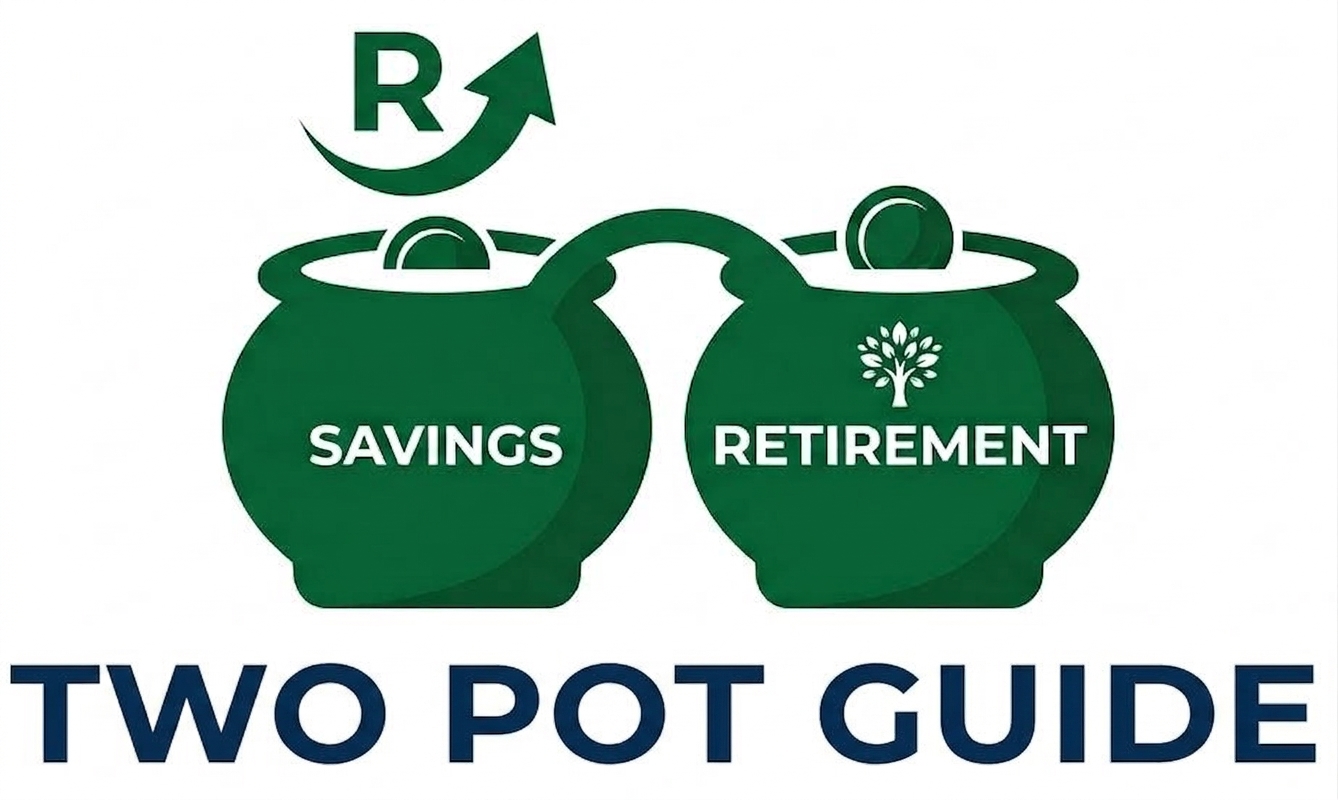
Before you apply for anything, you need to know which pot you are dealing with. The two-pot system divides your retirement savings into three components, and only one of them allows early access.
The savings pot receives one-third of every rand you contribute after 1 September 2024. This is the pot you can withdraw from, once per tax year, with a minimum withdrawal of R2,000. There is no maximum, but you can only access what has accumulated in this pot, not in the others.
The retirement pot receives the remaining two-thirds of your post-September 2024 contributions. This pot is locked until you retire. You cannot access it early under any circumstances under current legislation.
The vested pot holds everything that accumulated before 1 September 2024. Under the old rules. Provident fund members over 55 on 1 March 2021 who stayed in the same fund retain certain legacy access rights at retirement, but this is not an early withdrawal mechanism. For most members, the vested pot is equally untouchable before retirement.
So when you read about how to apply for two-pot system in the context of early access, you are applying to withdraw from your savings pot only. Keep that clearly in mind before you start.
Who Qualifies and What the Minimum Requirements Are
Any active member of a retirement fund that falls under the Pension Funds Act can access their savings pot once the balance reaches at least R2,000. This covers pension funds, provident funds, preservation funds, and retirement annuities. The legislation that governs this framework is the Revenue Laws Amendment Act of 2024, which amended both the Income Tax Act and the Pension Funds Act.
You do not need to be in financial distress to qualify. National Treasury deliberately did not attach a hardship requirement to savings pot withdrawals, unlike some earlier proposals. If you have R2,000 or more in your savings pot and you want to withdraw it, you can apply. The only conditions are the once-per-tax-year limit and the R2,000 minimum.
A few groups face different rules. Members of the Government Employees Pension Fund are in a defined benefit fund that operates under the Government Employees Pension Law, not the Pension Funds Act. The GEPF was excluded from the two-pot system at launch on 1 September 2024. National Treasury has indicated a phased inclusion process, but GEPF members should confirm directly with the GEPF before assuming any savings pot access.
Members of the South African National Defence Force Fund and certain other public sector funds are in similar positions. If you are unsure whether your specific fund is included, your fund administrator or HR department can confirm.
How to Apply for Two-Pot System Through Your Fund Administrator
The application process runs through your fund administrator, not directly through SARS. SARS plays a critical role in the background, but you do not contact them to initiate a withdrawal. You start with whoever manages your fund.
For retirement annuity holders, this means going directly to your insurer or investment house. Allan Gray members apply through the Allan Gray online portal at allangray.co.za. Old Mutual RA members use the Old Mutual app or online portal. Sanlam RA holders use MySanlam. Discovery and Momentum both have dedicated savings pot withdrawal options inside their member portals. In each case, you log in, find the savings pot withdrawal section, complete the digital form, and submit. The platform then applies to SARS for a tax directive on your behalf.
For pension and provident fund members in employer-sponsored funds, the process often starts with your employer’s HR department or payroll team. Many employers use umbrella funds administered by Alexander Forbes, Sanlam Corporate, Old Mutual Corporate, or similar third-party administrators. In these cases, your employer’s HR system or the administrator’s member self-service portal is your entry point. Going directly to the insurer without involving HR first often results in your application being bounced back.
In practice, what most fund members find is that the online portal for their specific fund is not always easy to locate. Start with a direct search for your fund administrator’s member portal, not the general company homepage. For example, Alexander Forbes has a separate member access platform from its main corporate site.
Once you submit the application, the fund administrator applies to SARS for a tax directive. SARS then instructs the administrator how much tax to withhold. The administrator deducts that tax and pays the net amount into your bank account. The full process, assuming no SARS compliance issues, typically takes five to fifteen business days.
What SARS Does With Your Withdrawal and What You Will Actually Receive
Savings pot withdrawals are taxed as ordinary income. SARS does not apply the more favourable retirement fund lump sum tax table to these withdrawals. Instead, your withdrawal amount is added to your other income for the year and taxed at your marginal rate.
Here is a concrete example. Thabo earns R25,000 per month, which puts his annual income at R300,000. He applies to withdraw R20,000 from his savings pot. SARS treats his income for that year as R320,000. His marginal rate in the 2025/26 tax year sits at 31%. SARS instructs his fund administrator to withhold R6,200 in tax. Thabo receives R13,800 in his account.
Now consider Lerato, who earns R12,000 a month (R144,000 annually) and withdraws R15,000. Her marginal rate is 18%. Tax on the withdrawal is R2,700. She receives R12,300.
The difference in those net amounts matters. The higher your income, the more of your savings pot withdrawal goes to SARS. This is why many financial planners suggest applying early in the tax year or in a month where your total income is lower, rather than in December when bonuses push your annualised income higher.
One more thing: the once-per-tax-year limit is firm. The South African tax year runs from 1 March to the last day of February. If you withdraw R2,000 in April, you cannot withdraw again until March the following year, even if your savings pot has grown substantially in the interim.
Documents and Information You Need Before Applying
Incomplete documentation is one of the most common reasons applications stall. Get these in order before you start.
You need your South African ID number and your tax reference number. Your fund administrator will not process a withdrawal without both. Your tax reference number appears on any SARS correspondence or on your eFiling profile at efiling.sars.gov.za.
Your banking details must match your ID exactly. Capitec, Nedbank, ABSA, Standard Bank, and FNB all verify account holder details before a fund administrator releases payment. If your account is in a maiden name and your ID reflects a different surname, you will hit a verification block. Update your bank account name or use an account that matches your current legal name.
Tax compliance is the single biggest delay factor. Your fund administrator is required by law to obtain a SARS directive before releasing any withdrawal. If your tax affairs are not in order, SARS will not issue the directive. Log into eFiling before you apply and check that your returns are up to date for all years in which you were required to file. If you have an outstanding debt with SARS or an account that shows as non-compliant, resolve it before submitting your savings pot application. This step alone prevents the majority of multi-week delays.
The Most Common Mistakes South Africans Make When Applying
The application process looks simple on the surface, but there are several ways it can go wrong.
Applying through the wrong channel is the most common error. If your fund is an employer-sponsored pension or provident fund, starting your application directly on the insurer’s website without going through your employer’s HR system first often leads to your application being rejected or returned. Always ask your HR or payroll department which portal you should use.
Assuming your savings pot is large enough to withdraw from is another frequent mistake. If you joined your current fund before 1 September 2024 and have not made contributions since then, or if your contributions since that date have been small, your savings pot may hold less than R2,000. You cannot withdraw below this threshold. Check your savings pot balance first.
Confusing the savings pot with the vested pot catches a lot of members off guard. Some members expect to access a large pre-September 2024 balance online, only to find that only a small post-September 2024 savings pot is available for early withdrawal. The vested pot cannot be accessed via the two-pot application process.
Finally, withdrawing when you have a high-income month without thinking through the tax consequences. A R30,000 withdrawal in a month where you also receive a performance bonus of R20,000 means your annualised income for directive purposes is significantly higher, and your tax rate on the withdrawal increases accordingly.
Withdrawal Rules by Fund Type: A Quick Reference
| Fund Type | Can Withdraw from Savings Pot | Application Channel | SARS Directive Required | |
| Pension Fund (employer-sponsored) | Yes | Employer HR or administrator portal | Yes | |
| Provident Fund (employer-sponsored) | Yes | Employer HR or administrator portal | Yes | |
| Retirement Annuity | Yes | Directly via insurer portal | Yes | |
| Preservation Fund | Yes | Directly via administrator portal | Yes | |
| GEPF | Excluded (phased inclusion pending) | N/A | N/A |
FAQ
How long does it take to receive money after applying for the two-pot system?
If your tax affairs are in order and your documentation is correct, most members receive payment within five to fifteen business days. The SARS directive typically takes 24 to 72 hours to process once the fund administrator submits the request. After the directive is received, most administrators pay out within two to five business days. Compliance issues with SARS can extend this timeline by several weeks.
Can I apply for the two-pot system if I am unemployed?
Yes. The two-pot system applies to the fund, not to your employment status. If you have a retirement annuity or a preserved pension or provident fund, you can apply to withdraw from your savings pot regardless of whether you are currently employed. Apply directly through the fund administrator’s member portal or contact them by phone to start the process.
Is there a fee for withdrawing from my savings pot?
Many fund administrators charge an administration fee for processing a savings pot withdrawal. Fees vary but typically range from R100 to R500, sometimes expressed as a percentage of the withdrawal amount. Your fund’s member guide or benefit statement will specify the applicable fee. This amount is deducted from your withdrawal before the net payment reaches your account.
Can I withdraw my full savings pot balance?
Yes. There is no maximum withdrawal limit from your savings pot per tax year other than the balance available. You can withdraw up to the full savings pot amount in a single application. The only restriction is the R2,000 minimum and the once-per-tax-year rule. After a full withdrawal, your savings pot balance returns to zero and rebuilds only as new contributions come in.
Read more: How to apply for two-pot system online withdrawal
Getting Started Without Making It More Complicated Than It Is
Check your savings pot balance through your fund’s member portal or your latest benefit statement. Confirm your tax compliance on SARS eFiling. Verify that your bank account details match your ID. Then log into the correct portal for your fund type, whether that is your employer’s HR system, your insurer’s member portal at Old Mutual, Sanlam, or Allan Gray, or your retirement annuity provider’s platform. The application itself is usually short. The preparation is what takes time, and it is what determines whether your money arrives in five days or five weeks.
The two-pot system gives you real access to a portion of your retirement savings before retirement. But every rand you take now is a rand that stops growing for the next ten, twenty, or thirty years. Be clear on the cost before you apply. If you want to understand exactly what SARS will deduct before you commit to a withdrawal, see our detailed breakdown of two-pot withdrawal tax rates by income bracket.
This article is for informational purposes only and does not constitute financial advice. Tax rules and fund regulations may change. Speak to a registered financial advisor or visit sars.gov.za for guidance specific to your situation.