

This article explains exactly how retrenchment notice period pay is calculated based on your length of service, whether your employer can force you to work your notice or pay you out instead, how this figure is taxed compared to your severance pay, where employees most commonly get confused, and what happens to your retirement fund alongside your final payout. Whether you are mid retrenchment right now or preparing for one, this gives you the actual figures and rules that apply.
Your notice period pay is not the same as your severance pay, and it is not taxed the same way either. This single mix up costs retrenched employees real money every year, because retrenchment notice period pay gets taxed as ordinary income while severance qualifies for a far more generous set of tax tables. If you are working out exactly what your final payout should look like, understanding this distinction matters as much as knowing the numbers themselves.
How Retrenchment Notice Period Pay Is Calculated
The Basic Conditions of Employment Act sets your minimum notice period based purely on how long you have worked for your employer, and this in turn determines your retrenchment notice period pay if your employer chooses to pay you out rather than have you work through the notice. If you have been employed for less than six months, you are entitled to one week’s notice. Between six months and a year of service, you are entitled to two weeks. Once you pass one year of service, the minimum jumps to four weeks, and it stays at four weeks regardless of whether you have worked 2 years or 20, unless your contract or a collective agreement specifies something longer.
Here is a practical example. If you earn R27,000 per month and have worked for your employer for 4 years, your notice period is four weeks under the BCEA minimum, and your retrenchment notice period pay comes to roughly R24,924, calculated by dividing your monthly salary by 4.33 weeks and multiplying by four. Take a second example with a shorter service history. If you earn R15,000 per month and have worked for 8 months, your notice period is two weeks, giving retrenchment notice period pay of roughly R6,928.
Working Your Notice vs Being Paid in Lieu
Your employer has a choice once your retrenchment is confirmed: have you physically work through your notice period, or pay you out immediately and end your employment right away. Both are lawful, and the decision usually comes down to whether your employer still needs you at work or would rather you leave immediately, sometimes for confidentiality or security reasons if your role involves sensitive information or client relationships.
If your employer asks you to work your notice, you continue receiving your normal salary as usual through payroll, taxed exactly as your regular income always has been. If your employer chooses to pay you out instead, that lump sum figure representing your retrenchment notice period pay is still taxed as ordinary income, just paid in one go rather than spread across your remaining weeks of employment. Either way, the amount you receive should be the same. The only difference is timing and whether you are still expected to show up for work.
How Retrenchment Notice Period Pay Is Taxed
This is where the confusion causes the most financial damage. Retrenchment notice period pay is taxed as normal income at your standard PAYE rate, exactly the same as any regular salary payment. It does not qualify for the special lump sum tax tables that apply to severance pay under a SARS tax directive, and it does not benefit from the R550,000 lifetime tax free threshold that applies to severance and retirement fund lump sums.
| Payment Type | Tax Treatment | Qualifies for Tax Directive |
| Retrenchment Notice Period Pay | Taxed as normal income at your PAYE rate | No |
| Severance Pay | Special lump sum tax tables, R550,000 lifetime tax free threshold | Yes |
| Leave Pay | Taxed as normal income at your PAYE rate | No |
| Retirement Fund Lump Sum | Same lump sum tables as severance, shares the same lifetime threshold | Yes |
A retrenched employee who assumes their entire final payslip, including notice pay and leave pay, gets the same tax break as severance is in for an unpleasant surprise when they see how much tax was actually deducted. Only the severance component of your payout goes through the more favourable calculation.
The Common Mistake: Assuming Notice Period Pay Gets the Same Tax Treatment as Severance
A common situation is an employee seeing a large combined figure on their final payslip and assuming the whole amount falls under the generous severance tax rules, only to discover later that their retrenchment notice period pay was taxed at their full marginal rate. Many workers make the mistake of not asking their employer or payroll department for a line by line breakdown showing exactly how much of the final payment was severance, how much was notice pay, and how much was leave pay, since each is taxed completely differently.
In practice what most retrenched employees find is that requesting this breakdown before the final payment is processed, rather than after, gives them a chance to flag any calculation errors while there is still time to correct them. Once the payment has gone out and PAYE has been deducted and paid over to SARS, fixing a mistake becomes a matter for your annual tax return instead of an immediate correction.
Notice Period Pay and Your UIF Claim Timing
One detail that catches people out is when they can actually start claiming UIF relative to their retrenchment notice period pay. You cannot claim UIF benefits while you are still formally employed and receiving your notice period pay, whether you are working through it or being paid out for it, since UIF is designed to support you once your employment relationship has genuinely ended. Once your notice period concludes and your employment officially ends, you or your employer submits a UI-19 form, and you register your claim through ufiling.labour.gov.za or at your nearest labour centre under the Department of Employment and Labour. Submitting your UIF claim too early, before your notice period pay period has actually run its course, is a common cause of processing delays.
What Happens to Your Retirement Fund During Your Notice Period
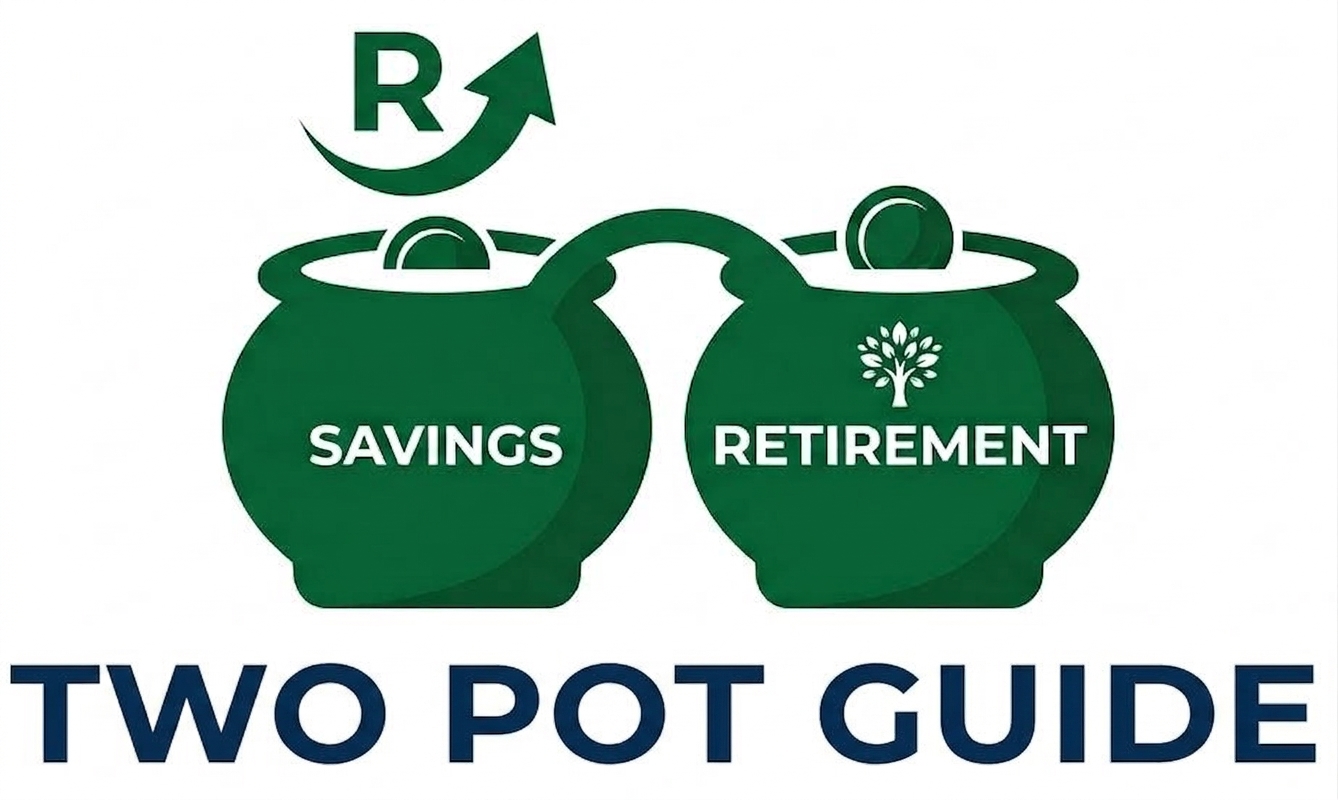
While you are working through your notice period or receiving retrenchment notice period pay, your retirement fund contributions typically continue as normal if you are still formally employed and receiving a salary through payroll. Once your employment actually ends, you then face decisions about your pension or provident fund, including whether to withdraw, transfer, or preserve those savings. Since September 2024, the two-pot retirement system splits your fund into a savings pot holding one third of new contributions, accessible relatively easily once you leave your job, and a retirement pot holding two thirds, which stays locked until you formally retire. A savings pot withdrawal is taxed at your marginal income tax rate through a SARS tax directive, similar to how your retrenchment notice period pay is taxed, but this is still a separate calculation from your severance lump sum.
Frequently Asked Questions
Is retrenchment notice period pay taxed the same as severance pay?
No. Retrenchment notice period pay is taxed as ordinary income at your standard PAYE rate, while severance pay qualifies for special lump sum tax tables with a lifetime tax free threshold under a SARS tax directive.
Can my employer make me work my notice period during retrenchment instead of paying me out?
Yes. Your employer can choose to have you work through your notice period rather than pay you out immediately, and both options are lawful as long as you receive the correct amount either way.
How is my retrenchment notice period pay calculated if I worked less than a year?
If you have worked less than six months, you are entitled to one week’s notice. Between six months and a year, you are entitled to two weeks. Beyond a year, the minimum is four weeks regardless of how many additional years you have completed.
Can I claim UIF while still receiving retrenchment notice period pay?
No. UIF claims can only be processed once your employment has formally ended, so you need to wait until your notice period concludes before submitting your UI-19 form and registering your claim.
Read more: Notice of retrenchment
Ask your employer for a written breakdown of your final payout showing exactly which portion is retrenchment notice period pay, which is severance, and which is leave pay, since each one is taxed differently and lumping them together hides real money you might be owed or overtaxed on. Confirm whether you will be working your notice or being paid out immediately, and time your UIF application to start only once your employment officially ends. Before you decide what to do with your final payout, understanding how your two-pot retirement savings withdrawal is taxed separately from both your notice pay and your severance could help you avoid an unnecessary tax bill.
This article is for informational purposes only and does not constitute legal or financial advice. Labour law and tax rules may change. For advice specific to your situation, consult a registered labour lawyer, a CCMA commissioner, or visit labour.gov.za and sars.gov.za.