

Two employees can lose their jobs on the same day, for what looks like the same reason, and walk away with completely different rights and completely different payouts. That is the reality behind retrenchment vs dismissal, and getting this distinction wrong is one of the most expensive mistakes a South African employee can make.
If your employer has used the wrong label for your termination, or hidden a dismissal behind retrenchment language, you could be missing out on severance pay you are legally owed, or losing a fair hearing you were entitled to. This article breaks down exactly how retrenchment and dismissal differ under South African labour law, what each one means for your pocket, and how to spot it if your employer has got the label wrong.
What Actually Separates Retrenchment From Dismissal
The core difference in retrenchment vs dismissal comes down to why your employment is ending. Retrenchment happens for operational requirements, meaning your employer’s business needs have changed, not because of anything you did. This could be a restructuring, a merger, technology replacing your role, or the business simply not being able to afford your position anymore. Dismissal, by contrast, is about you specifically. It covers misconduct, poor performance, incapacity due to illness or injury, or incompatibility with the role, and it follows a completely different legal process under the LRA.
This distinction matters because Section 189 of the Labour Relations Act governs retrenchment specifically, requiring consultation with you or your union before a final decision, while dismissal for misconduct or poor performance requires a disciplinary hearing or a formal incapacity process instead. Confusing the two, whether by accident or design, changes both the process your employer must follow and what you are entitled to receive at the end of it. It also changes where the burden of proof sits. In a dismissal dispute, your employer must show the reason was fair and the process was properly followed. In a retrenchment dispute, your employer must show the operational reason was genuine and that consultation actually took place before the final letter went out.
What You Are Owed in Each Scenario
The financial gap between retrenchment vs dismissal can be significant, and this is where most employees get caught out.
| Aspect | Retrenchment | Dismissal (misconduct or poor performance) | ||
| Severance pay | Minimum one week per completed year, Section 41 BCEA | Not required by law | ||
| Process required | Section 189 consultation | Disciplinary hearing or incapacity process | ||
| CCMA referral window | 30 days from dismissal | 30 days from dismissal |
If your basic salary is R21,000 per month and you have worked for 9 years, a lawful retrenchment entitles you to a minimum statutory severance of roughly R43,600. If that same employee is dismissed for misconduct instead, after a fair disciplinary hearing with a valid reason, there is no severance pay owed at all under the BCEA. This is exactly why some employers are tempted to label a dismissal as a retrenchment, or vice versa, depending on which outcome suits them financially, and why you need to look past the label your employer uses and check what actually happened.
A Second Example: When the Label Does Not Match the Reality
Consider an employee earning R16,500 per month with 4 years of service, told the company is retrenching due to a client contract ending. If that is genuinely an operational requirements situation, backed by real evidence such as the lost contract and a proper Section 189 consultation, the statutory minimum severance works out to roughly R15,200. But if the real reason is that management wanted this specific person out of the business for performance related reasons, and simply called it retrenchment to avoid running a proper disciplinary process, that mislabelling itself is a form of unfair dismissal. The CCMA and Labour Court look past the label your employer puts on the termination and examine the actual reason behind it, because retrenchment vs dismissal is decided by substance, not by what the letter says.
The Common Mistake: Assuming the Employer’s Label Is Final
A common misconception is that once your employer calls something a retrenchment, or calls something a dismissal, that label is the end of the discussion. It is not. Many workers make the mistake of accepting a retrenchment package without questioning whether the underlying reason was genuinely operational, missing out on the chance to challenge what may actually have been an unfair dismissal disguised as retrenchment. Equally, some employees dismissed for alleged poor performance never check whether the real driver was a cost cutting decision that should have triggered a proper Section 189 process and a severance payout instead.
In practice what most people find is that the safest first step is to ask your employer directly, in writing, for the specific operational reason behind a retrenchment, or the specific evidence behind a misconduct or performance dismissal. If the explanation does not add up, or if you were never consulted before the decision was made, you have grounds to refer the matter to the CCMA within 30 days of your dismissal, regardless of which label your employer used.
What Happens to Your Pension or Provident Fund in Either Case
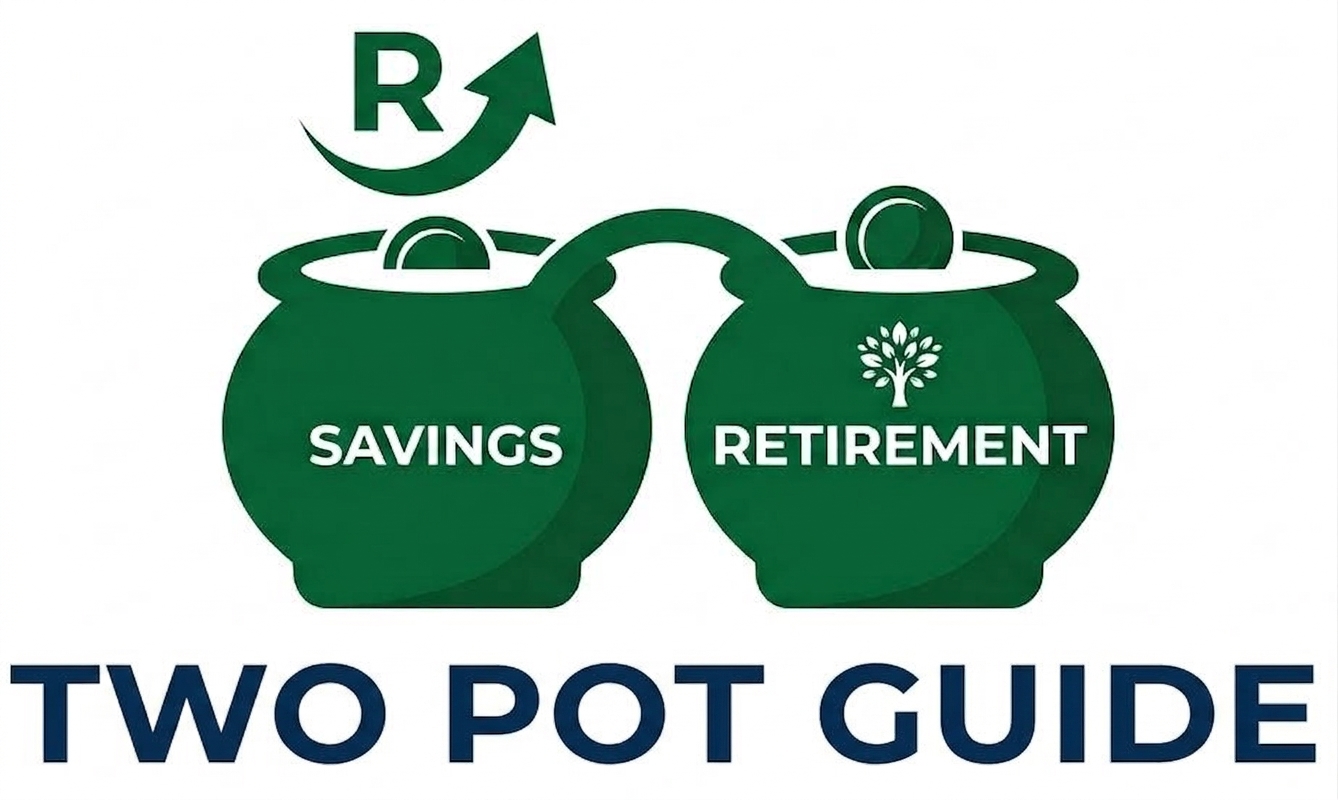
Whether you leave your job through retrenchment vs dismissal, your retirement fund membership ends and you face the same set of choices about what to do with the money. You can withdraw it as cash, transfer it to a preservation fund or retirement annuity, or split the benefit between the two. Since the two-pot retirement system came into effect, your fund is divided into a savings pot, a retirement pot, and a vested pot, and your savings pot can generally be accessed as a cash withdrawal while your retirement pot must be preserved, transferred, or annuitised regardless of whether your exit was a retrenchment or a dismissal. The tax treatment of any lump sum you take also follows the same Income Tax Act lump sum tables in both scenarios, so this decision deserves careful thought no matter which door you walked out of.
Claiming UIF After Retrenchment or Dismissal
Your right to claim UIF does not disappear just because your employer used the word dismissal rather than retrenchment, provided the dismissal was not for misconduct connected to fraud against the fund itself. In both cases, you register your claim through ufiling.labour.gov.za or at your nearest Department of Employment and Labour office, using your UI-19 form, ID, and banking details. The amount you receive depends on your salary history and contribution period, not on whether your termination was labelled retrenchment or dismissal, so do not assume a dismissal disqualifies you from UIF benefits altogether.
Frequently Asked Questions
What is the main difference between retrenchment and dismissal?
Retrenchment is based on your employer’s operational needs and requires a Section 189 consultation process, while dismissal is based on your conduct, performance, or capacity and follows a disciplinary or incapacity process instead. Only retrenchment carries a statutory minimum severance pay obligation under Section 41 of the BCEA.
Can my employer dismiss me and call it a retrenchment to avoid a disciplinary hearing?
No, and if they do, this can be challenged at the CCMA as an unfair dismissal disguised as retrenchment. The CCMA looks at the actual reason behind your termination, not just the label your employer used.
Do I get severance pay if I am dismissed for poor performance?
No, severance pay under the BCEA only applies to retrenchment for operational requirements. A fair dismissal for poor performance or misconduct does not carry a statutory severance obligation.
How long do I have to dispute whether my termination was really a retrenchment?
You have 30 days from the date of your dismissal to refer the matter to the CCMA, regardless of whether your employer labelled it retrenchment or dismissal.
Read more: Retrenchment vs termination
Look past whatever label your employer used and check the real reason behind your termination against what actually happened in the weeks before it. If you were never consulted before a so called retrenchment, or the evidence behind a dismissal does not hold up, note your 30 day CCMA deadline today rather than waiting. Before you decide what to do with any payout you receive, understanding how your two-pot retirement savings are affected by retrenchment could save you thousands in tax.
This article is for informational purposes only and does not constitute legal or financial advice. Labour law and tax rules may change. For advice specific to your situation, consult a registered labour lawyer, a CCMA commissioner, or visit labour.gov.za and sars.gov.za.